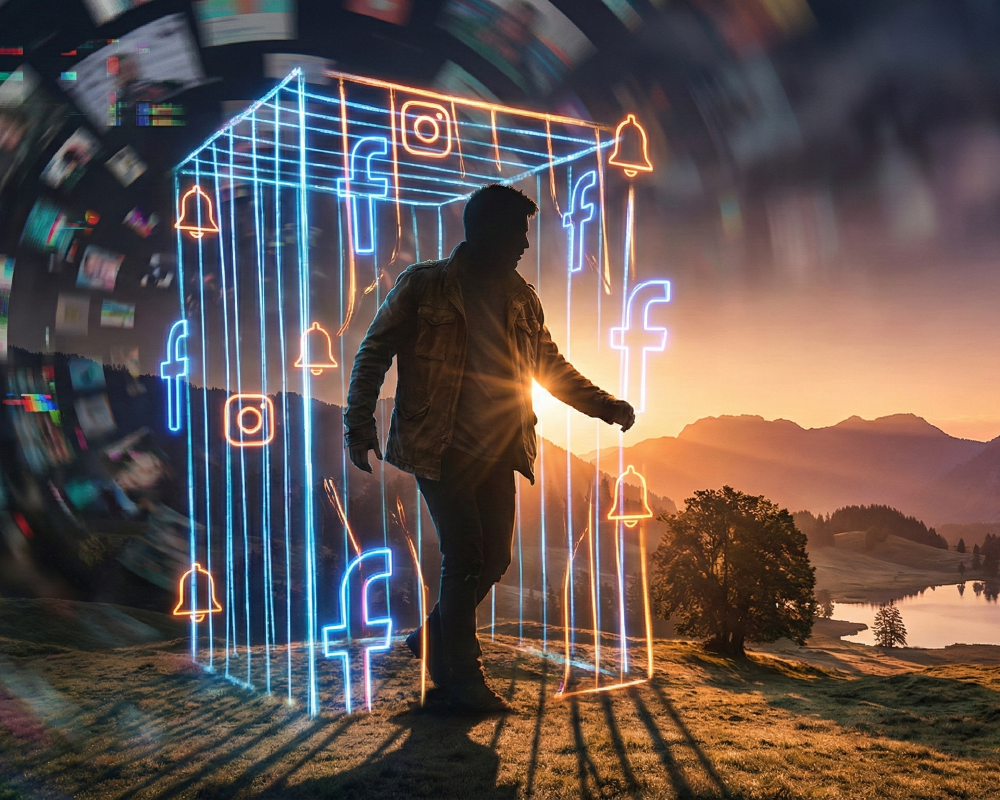
In a world overflowing with distractions, our brains are constantly bombarded with “cheap dopamine.” This is the instant gratification we get from endless scrolling on social media, binge-watching TV shows, or eating junk food. It feels good in the moment, but it costs us dearly in the long run. Research indicates that social media usage can activate the brain’s reward system in ways similar to substance addiction (Turel et al., 2014).
Success requires sustained effort, focus, and the ability to delay gratification. This is where “expensive dopamine” comes in. It’s the satisfaction you get after finishing a tough workout, completing a complex project, or learning a new skill. It’s harder to get, but it’s far more rewarding.
What is Cheap Dopamine?
Cheap dopamine is the reward your brain gets with little to no effort. It’s the “hit” you feel when you get a like on Instagram, check a notification, or eat a sugary snack.
The problem isn’t the dopamine itself; it’s the source and the ease. When your brain gets used to high levels of dopamine for no effort, it starts to crave it. Hard work, which releases dopamine more slowly and only after effort, becomes less appealing. This is why it’s so hard to focus on a book after spending an hour on TikTok.
The Cost of Instant Gratification
- Reduced Focus: Your attention span shortens as you train your brain to seek constant novelty.
- Lack of Motivation: Why work hard for a reward later when you can get a reward right now for free?
- Anxiety and Restlessness: The constant need for stimulation makes silence and boredom unbearable.
Expensive Dopamine: The Path to Success
“Expensive dopamine” is the reward system of high achievers. It is earned through:
- Deep Work: Spending hours solving a difficult problem.
- Physical Exercise: Pushing your body to its limits.
- Learning: The struggle of mastering a new concept.
- Delayed Gratification: Saving money, building a business, or working on a long-term goal.
The ability to delay gratification is a key predictor of success. The famous “Marshmallow Experiment” demonstrated that children who could wait for a larger reward (two marshmallows) instead of taking a smaller immediate one (one marshmallow) tended to have better life outcomes, including higher academic achievement and better health (Mischel et al., 1972).
When you detach from cheap dopamine, you reset your brain’s baseline. Boredom becomes a tool for creativity, not a state to escape. Difficult tasks become engaging challenges rather than insurmountable obstacles.
How to Detox and Reclaim Your Focus
- Digital Detox: Set strict limits on social media and entertainment usage.
- Embrace Boredom: Let yourself do nothing for a while. Let your mind wander without reaching for your phone.
- Do Hard Things: Intentionally schedule difficult tasks early in the day when your willpower is highest.
- Visualize Long-Term Rewards: Keep your eyes on the prize. Remind yourself why you are making these sacrifices.
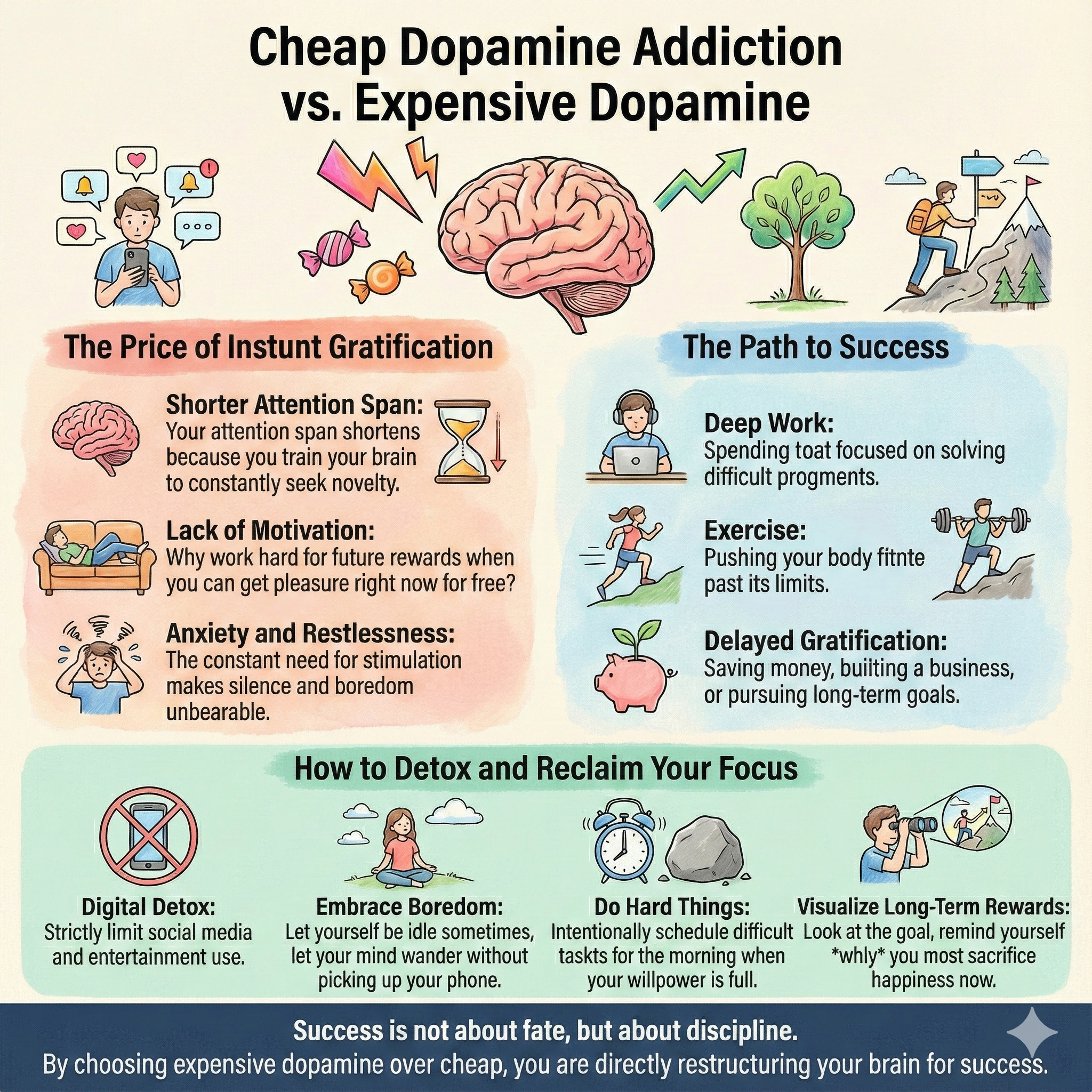
Success isn’t about luck; it’s about discipline. By choosing expensive dopamine over the cheap kind, you are literally wiring your brain for success.
References
- Mischel, W., Ebbesen, E. B., & Raskoff Zeiss, A. (1972). Cognitive and attentional mechanisms in delay of gratification. Journal of Personality and Social Psychology, 21(2), 204–218.
- Turel, O., He, Q., Xue, G., Xiao, L., & Bechara, A. (2014). Examination of neural systems sub-serving facebook “addiction”. Psychological reports, 115(3), 675-695.